




register for newsletter
get latest company news
+86 18506936263



The global textile market is massive. According to a report by Grand View Research, its market size reached $1.83727 trillion in 2023 and is expected to grow at a compound annual growth rate (CAGR) of 7.4% through 2030. Printed textiles alone represent a significant market within that.
After further segmentation, Future Market Insights reported that the global digital textile printing market was worth $2.99 billion in 2023 and is projected to reach $8.897 billion by 2034, with a CAGR of 12.1%. Most forecasts align with this estimate. Currently, digital textile printing accounts for around 5% of the entire textile printing market, as traditional dye and screen-printing methods still dominate.
digital printing has garnered attention for its rapid growth. Many factors drive the increase in textile sales—new and improved hardware, software, and inks, along with environmental, production, and efficiency advantages.
During the pandemic, digital textile printing surged across apparel, signage, and other product sectors. While there was a slowdown post-pandemic due to market oversupply, key players now report that growth has resumed across all application areas.
Recovery and Outlook
Micol Gamba, Director of Product Marketing and Textiles at EFI, stated that digital textile printing revenues increased in 2023 according to WTiN data, although sales volume did not reflect the same growth. This was attributed to weak global economic recovery and ongoing uncertainties causing many companies to delay investment.
“While growth may remain weak in 2024, it is expected to pick up in 2025,” Gamba said. “Meanwhile, the shortage of skilled workers in analog textile printing has reached record highs, especially in Europe, the Middle East, and Africa (EMEA), opening opportunities for further digital adoption.”
Ilan Elad, President of Kornit Americas, said digital textile printing peaked during the pandemic. “Everything shifted to on-demand production and e-commerce. After the second wave, people wanted to go out again,” he said. “Demand dropped significantly, or you could say there was market saturation. Although we now see some movement as life returns to pre-pandemic levels, caution remains. But product cycles are shortening, and retailers are restocking. Consumers are also more cost-conscious now.”
Kitt Jones, Manager of Business Development and Co-Creation at Roland DGA, reported that the company has seen growth in all digital printing segments, including digital textiles.
“This is due to increasing demand for rapid customization and on-demand printing, as well as innovations in printing technology,” Jones said. “Advancements like better printheads, higher resolution, faster speeds, and more economical machines are making digital textile printing more efficient and cost-effective. Overall, these factors are strengthening and expanding the market.”
Simon Daplyn, Product & Marketing Manager at Sensient (Taiyang Chemical Group), noted that although the market grew, it stagnated after peaking in 2021 when pandemic restrictions eased.
“Other influencing factors include the war in Ukraine, its impact on energy costs, the Israel-Gaza conflict, and global political instability,” Daplyn said. “These issues have driven inflation in key countries, leading consumers to reduce spending on new clothes and home textiles. Brands and retailers now face high inventory levels, reducing demand for new printed fabrics.”
“European countries like Italy and Turkey—important digital textile producers—are particularly affected by these supply-demand issues,” Daplyn added. “In contrast, Asia has seen growth in the past 18 months, especially in equipment and consumables from China. There is optimism for a return to stronger, more sustained growth starting late 2024.”
“Driven by advancements in print technology and ongoing demand for customized clothing, the digital textile market continues to grow,” said Lily Hunter, Professional Imaging Product Manager at Epson America.
Paul Edwards, VP of the Digital Division at Sakata INX, noted that the digital textile market is growing but highly dependent on specific products and applications. “Since the pandemic, both the market and its trends have changed significantly,” he added. “Roll-to-roll digital fashion printing using reactive dyes has struggled and is still slowly recovering. Dye-sublimation textiles for display also declined due to event cancellations but are rebounding more quickly.”
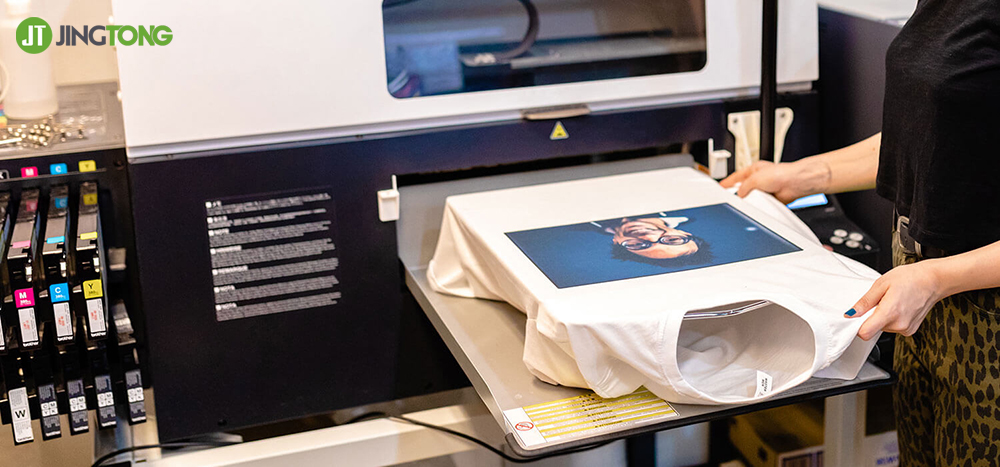
Growth is strongest in short-run and personalized applications, produced closer to end users rather than in traditional textile regions. This trend has supported growth in Direct-to-Garment (DTG) and Direct-to-Film (DTF) printing across textiles and other substrates.
Part 01: Printing Technology Development
Much of the growth in digital textiles can be directly attributed to new printing equipment that boosts quality and speed. According to Hunter, ongoing technological advancements are driving this market forward.
“Beyond established dye-sublimation and DTG technologies, demand for DTF (Direct-to-Film) transfer printing is rising,” Hunter said. “Technology expansion and enhancements to both new and existing machines make textile printing more accessible to everyone from small creative entrepreneurs to large-scale operations.”
Epson has focused on offering compact, affordable, and high-quality digital textile printing technology to creative professionals.
“The SureColor F1070 supports both DTG and DTF and brings Epson’s digital textile printing expertise to an entry-level machine that helps businesses enter the garment decoration market,” Hunter noted.
“Two factors are game-changers,” said Elad. “Screen printing allows for two to three colors and is ideal for large runs. Our MAX technology brings print quality up to screen-printing levels, and when paired with our Apollo system, the entire process can be handled by one person, reducing total ownership cost. We’re targeting niche markets with higher color variety and small batches.”
“If screen printers must run small batches, they become inefficient,” Elad added. “With machines like Apollo, those jobs go digital while large batches stay on screen presses. All companies that beta-tested Apollo eventually purchased it.”
Daplyn explained that although OEMs are strengthening their single-pass printer lines, high-output scanning systems with 32 to 72 printheads are also gaining popularity. “More heads increase productivity and provide redundancy, which appeals to many print businesses.”
Edwards noted new entrants in the DTG and DTF markets. “Kornit was an early DTG leader. Now others like M&R, ROQ, and Aeoon are entering the space,” he said. “dtf printers, often cheaper and more efficient than DTG, are proliferating—many coming from China.”
Gamba emphasized that operational efficiency is vital for industrial competitiveness. “Smaller batch sizes and more diverse designs are driving demand for high-productivity, efficient solutions,” she said. “For example, the EFI Reggiani EXTRA offers more colors and faster speeds, up to 12-color configurations that expand the gamut, improve penetration and quality, and allow for greater creative freedom.”
Part 02: Market Segments
In terms of leading segments, ink industry experts point to apparel, soft signage, and home goods as the strongest. Edwards said the fashion sector, particularly fast fashion and DTG, has seen the most growth.
“With digital printing, fashion collections can now launch multiple times a year instead of seasonally,” Edwards said. “Smaller batches reduce risk, lower unsold inventory costs, and even allow full product write-offs without major loss. Local production greatly shortens turnaround time—from weeks to days—which is especially beneficial for DTG and DTF operations.”
T-shirts have seen the most growth—a trend likely to continue as small businesses and Etsy sellers adopt this technology. Hunter noted this shift.
Gamba stated that fashion remains the largest driver of digital textile printing. “Dye-sublimation has fueled this growth, especially in sportswear, and that’s continued steadily,” she said. “Home textiles spiked during lockdowns but have since stabilized.”
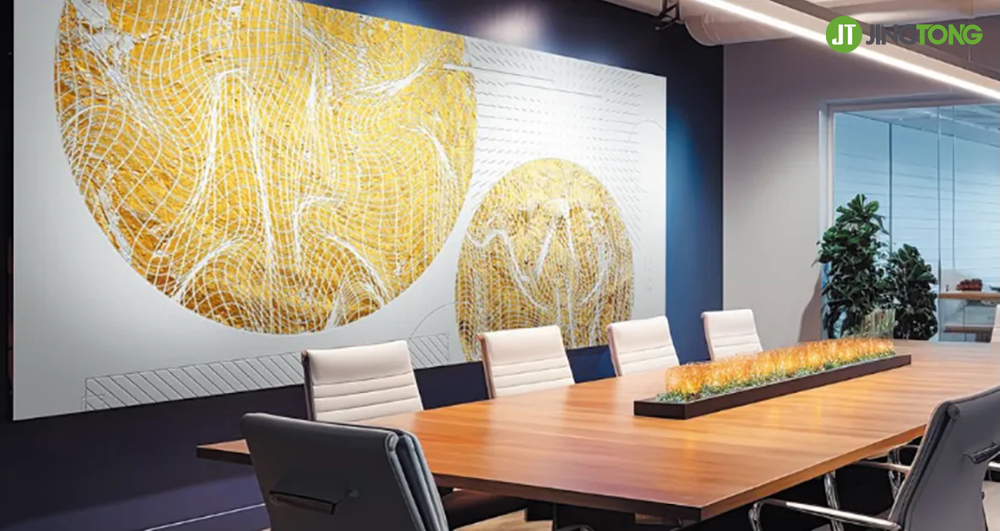
Jones observed broad market growth but noted that interior design and decor have outpaced others. “Digital printing enables custom curtains, upholstery, and decor fabrics,” he said. “Consumers’ desire for personalized living spaces drives demand. Custom wallpaper, acoustic panels, and furniture are also expanding segments.”
Jones cited DG DIMENSE as an innovative solution for large-format prints with intricate 3D effects. “The Dimensor S printer, paired with special DG DIMENSE water-based ink and media, creates textured wallpapers with stunning visual and tactile appeal,” he said. “Promotional products—like branded apparel, banners, and trade show materials—are also making a comeback. Digital printing’s flexibility and speed make it attractive for impactful short-run designs.”
According to Daplyn, digital printing is mature in fashion, sportswear, and home textiles, though global macroeconomic conditions have limited growth.
“One area rebounding is signage and display,” he added. “The return of exhibitions and the shift to PVC-free, eco-friendly materials have increased demand for digitally printed signage.”
Part 03: Ink Technology Advances
Ink technology advances are also driving market growth—especially pigments.
“Though pigment inks have existed for over a decade, they’re still relatively new in industrial use due to past challenges with vibrancy, durability, feel, and printhead reliability,” said EFI’s Gamba. “We’ve overcome many of these through brighter colors, better fastness, and high printhead compatibility.”
Gamba highlighted the new EFI Reggiani ecoTERRA—a game-changing all-in-one pigment printing solution. “This eco-friendly water-based ink system eliminates the need for pre- and post-treatment equipment, significantly reducing water, energy, and chemical usage for a truly sustainable direct-to-fabric printing process.”
Daplyn said ink makers are focused on adding value through sustainability, compliance certifications, process simplification, expanded color options, and broader substrate compatibility.
“Dye inks are typically substrate-specific, so development now aims at incremental improvements,” Daplyn explained. “For example, newer reactive dye formulations for cotton, viscose, and silk reduce dye runoff during post-processing, which lowers wastewater treatment needs. Our new Xennia Amethyst Evo line improves efficiency, color balance, and washfastness.”
A key focus is digital pigment printing. “Many companies aim to bridge the gap in vibrancy and fastness between pigment and dye inks,” Daplyn said. “Using advanced binders and finely tuned dispersions, these new formulations are performing similarly.”
Taiyang Chemical will soon launch a new industrial pigment ink line—Xennia Sapphire—with improved fastness, color strength, cross-substrate compatibility, and print performance.
Edwards stressed the benefits of pigment development. “Reactive dye processes require extensive treatment and generate wastewater. That’s why certain regions prefer pigment methods,” he said.
“Pigments with a good color gamut, washability, and feel are why DTG products are gaining recognition,” Edwards added. “Improvements in flexibility have made DTG more viable, and enhanced pretreatment and pigments are improving performance across fabric types.”
Jones emphasized that ink innovation is crucial for digital textile growth. “This includes better color, durability, eco-friendliness, substrate range, and drying time,” he said. “High-performance inks tailored for athletic or technical textiles—like moisture-wicking or abrasion resistance—are also adding product value.”
“Ink tech is central to printing quality and performance,” Hunter concluded. “Advances have boosted adhesion, versatility, feel, washfastness, and color gamut—all vital for superior final products.”
If have interest to learn more about the digital printing ink, please contact JINGTONG Sales team to learn more.
get latest company news
Scan To Wechat