


register for newsletter
get latest company news
+86 13113657186



Industrial Direct-to-Film (DTF) printing is designed for businesses producing customized garment transfers in larger quantities. A complete industrial workflow combines roll-to-roll printing, adhesive powder application, curing, film processing, and heat pressing.
A 24-inch dtf printer provides a wider printing format for arranging multiple designs and supporting continuous production. When integrated with automated powder shakers, curing systems, cutting equipment, and heat presses, it helps apparel manufacturers improve production efficiency and maintain consistent transfer quality.
Why Choose an Automated Industrial DTF Workflow?
As customized apparel orders increase, manual production becomes more time-consuming. An automated DTF workflow connects different production stages to improve efficiency and process consistency.
Higher Production Capacity
The 24-inch printing format allows multiple designs to be arranged across the film. Continuous feeding and automated powder curing help support larger production volumes.
Reduced Manual Operations
Automated printing, powder application, and curing reduce repetitive handling and simplify daily production management.
Consistent Transfer Quality
Uniform adhesive powder application and controlled curing help improve transfer adhesion, surface appearance, and printing consistency.
Improved Labor Efficiency
Automation reduces repetitive manual tasks, allowing operators to focus on equipment monitoring, material handling, and quality inspection.
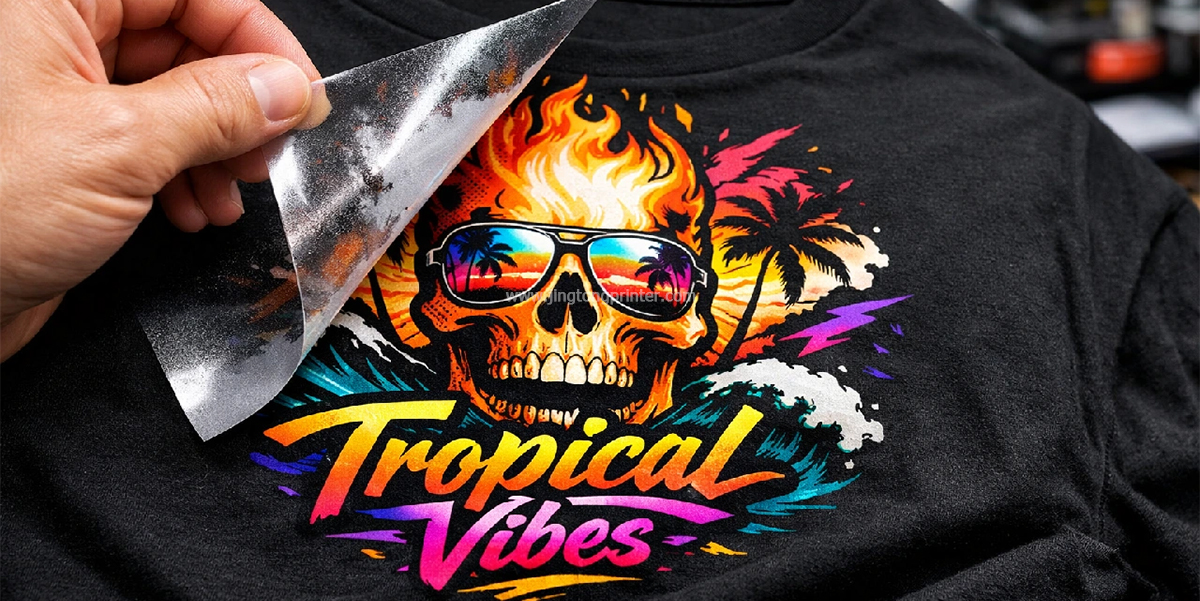
How Does an Industrial DTF Workflow Work?
A typical industrial DTF production line includes the following stages:
1. Artwork Preparation
Digital designs are processed through RIP software, which manages color separation, white ink generation, and printing parameters.
2. Film Printing
PET transfer film passes through the 24-inch DTF printer. CMYK inks reproduce the design, while white ink creates a backing layer for transferring graphics onto dark or colored garments.
3. Powder Application
Hot-melt adhesive powder is applied to the wet printed areas. A powder shaker distributes the adhesive and removes excess material to achieve more uniform coverage.
4. Powder Curing
The film enters a heating system where the adhesive powder melts and bonds to the printed ink layer. Temperature and curing time must match the powder manufacturer's specifications.
5. Film Cutting and Lamination
Printed transfers can be cut into individual designs or production batches. Depending on the film system, lamination may also be used to prepare transfers for subsequent handling.
6. Heat Pressing and Peeling
The transfer is positioned on the garment and applied using a heat press. After pressing, the film is peeled according to its release characteristics, which may be hot, warm, or cold peel.
7. Final Inspection
Finished garments are checked for adhesion, color appearance, edge quality, and surface defects before packaging.
This workflow is widely used for customized T-shirts, hoodies, sportswear, uniforms, promotional clothing, and other personalized textile products.
Core Equipment and Consumables for Industrial dtf printing
A complete industrial DTF system requires compatible printing, powder application, curing, and transfer equipment.
Industrial 24-Inch DTF Printer and Powder Shaker
The printer produces full-color designs on PET film using CMYK and white pigment inks. The connected powder shaker applies adhesive powder and removes excess material before curing.
Automatic Cutting and Laminating Equipment
Cutting systems separate printed designs or production batches, while compatible laminators prepare transfer sheets for handling and storage. These processes help reduce manual work in larger production operations.
Heat Press and Auto-Peel System
Heat presses transfer printed designs onto garments through controlled temperature, pressure, and time. Multi-station presses and automatic peeling systems can further reduce repetitive manual operations.
DTF Printing Consumables
● PET Transfer Film: Provides the printing and transfer surface, with coating and release properties affecting print performance.
● DTF Pigment Ink: CMYK inks reproduce colors, while white ink creates the backing layer.
● Hot-Melt Adhesive Powder: Bonds the printed design to the textile during heat pressing.
Compatible consumables are essential for stable production and reliable garment adhesion.
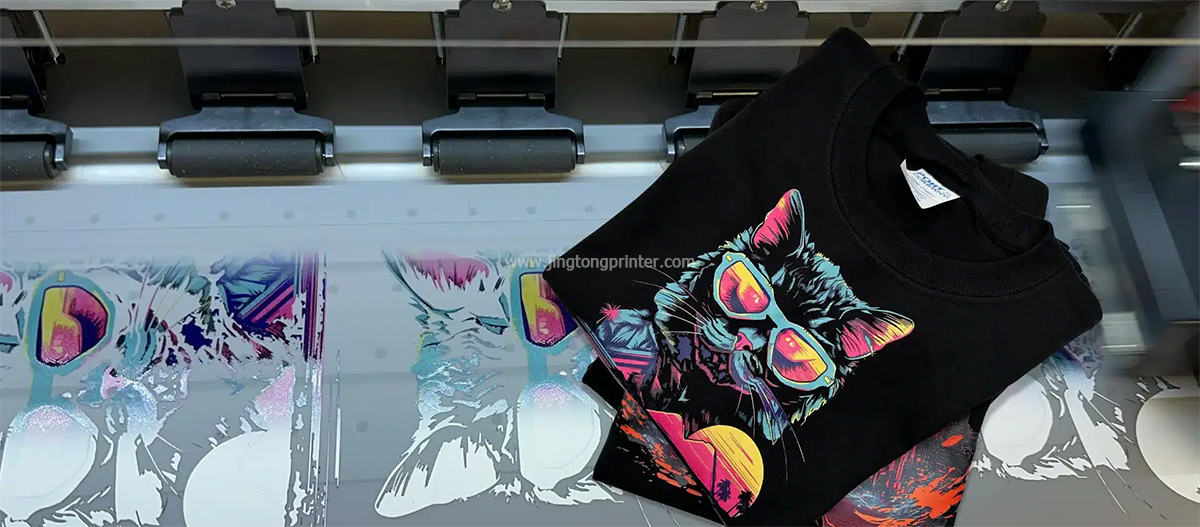
Industrial DTF Workflow vs. Manual Production
Traditional DTF production often requires operators to move films manually between printing, powder application, curing, cutting, and pressing. These additional handling steps can increase production time and create inconsistencies.
An integrated industrial workflow connects these processes through automated equipment, reducing repetitive tasks and improving production organization.
Actual output depends on printhead configuration, resolution, artwork coverage, film speed, curing performance, and heat press cycle time. Therefore, production capacity should be evaluated based on the entire workflow rather than printer speed alone.
For businesses handling regular customized apparel orders, automation can improve labor utilization and support more predictable production scheduling.
Frequently Asked Questions About industrial DTF printing
What equipment is needed for an industrial DTF workflow?
A typical setup includes a roll-to-roll DTF printer, powder shaker, curing oven, cutting system, and heat press. A laminator and automatic peeling system can be added depending on production requirements.
How many operators are needed for an automated DTF line?
This depends on the automation level, production volume, and material handling requirements. Automated systems reduce manual operations, but equipment monitoring, loading, and quality inspection still require operator involvement.
What is the production capacity of a 24-inch DTF printer?
Output depends on printhead configuration, resolution, printing speed, and artwork coverage. Downstream equipment, especially curing and heat pressing, also affects overall production capacity.
What consumables are required for DTF printing?
The main consumables are PET transfer film, CMYK and white dtf inks, and hot-melt adhesive powder. Their compatibility affects printing performance, film release, and garment adhesion.
Is industrial DTF printing suitable for small businesses?
Industrial systems are generally more suitable for businesses with regular orders and higher production requirements. Smaller businesses may find compact dtf printers and powder shaker combinations more practical.
get latest company news
Scan To Wechat