









register for newsletter
get latest company news
+86 13113657186



Ink plays an essential role in Direct-to-Film (DTF) printing. Unlike traditional textile printing methods that apply ink directly to fabric, DTF uses specialized inkjet inks to create designs on PET transfer film before transferring them onto garments through heat pressing.
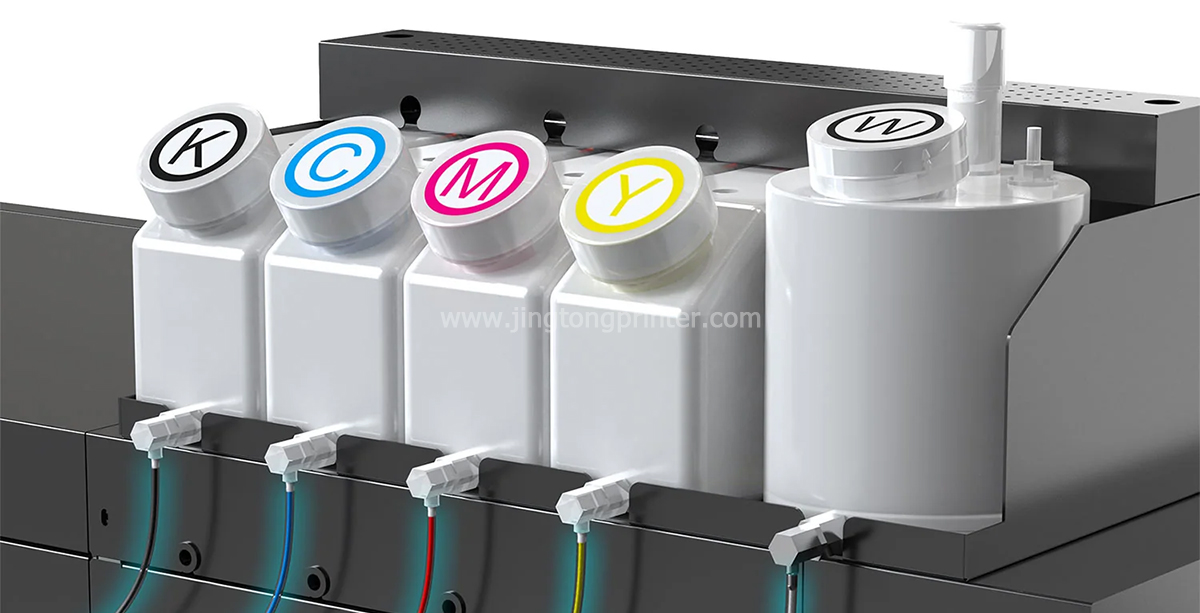
A standard dtf printing system uses four basic CMYK colors (Cyan, Magenta, Yellow, and Black) together with white ink. Each ink has a different function in image reproduction, color accuracy, and fabric coverage. Understanding how these inks work together helps businesses achieve consistent print quality and reliable transfer results.
How CMYK Ink Works in DTF Printing
CMYK ink is responsible for reproducing the colors and details of a digital design. Cyan, Magenta, Yellow, and Black are combined in different proportions to create a wide range of colors, gradients, and graphic elements.
During printing, the RIP software converts digital artwork into ink output instructions. The printer then deposits controlled amounts of each color onto the PET film through its printhead nozzles.
Ink quality, printhead condition, resolution, and ICC color profiles all influence the final result. Poor ink compatibility or incorrect color settings may cause color shifts, uneven tones, and inconsistent image reproduction.
DTF CMYK inks are generally formulated with pigment-based colorants to provide strong color performance and suitable transfer characteristics. Their formulation must also be compatible with the printer's ink delivery system and printhead requirements.
Why Is White Ink Important in DTF Printing?
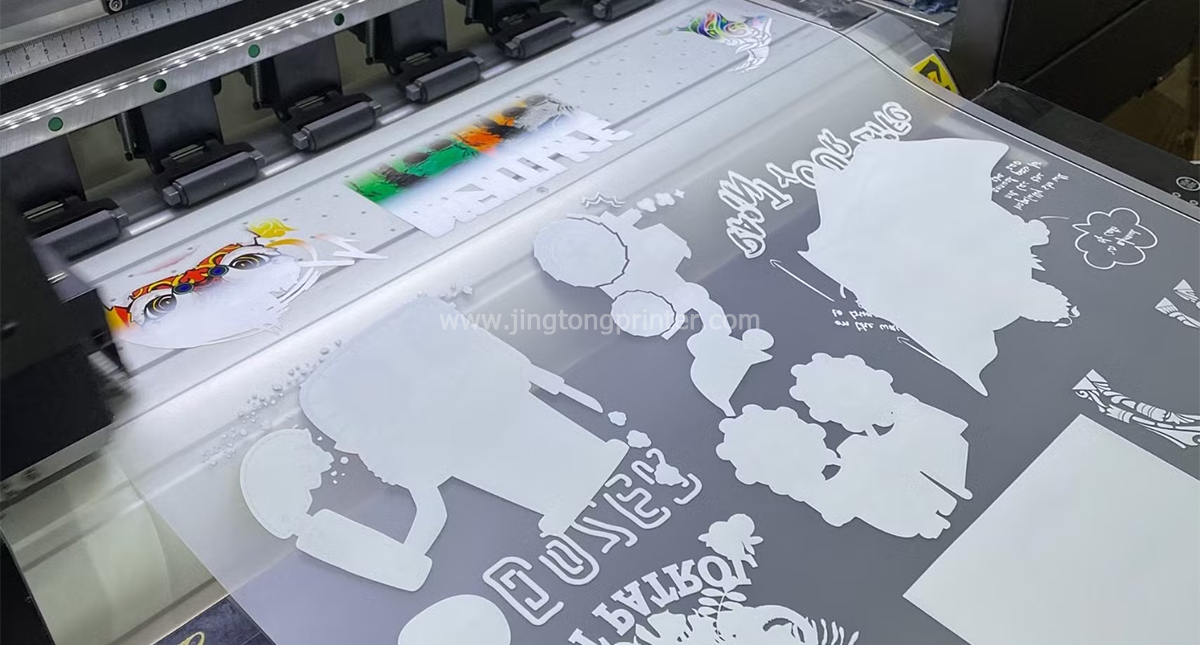
White ink is one of the most important components of the DTF process. It provides an opaque backing layer that allows colored designs to appear vibrant on dark or colored garments.
Unlike printing on white fabric, where the garment itself can provide a light background, printing on dark materials requires an additional white layer to prevent the fabric color from affecting the design.
In a typical DTF workflow, CMYK colors are printed first, followed by a white ink layer on the transfer film. The white ink acts as a foundation for the final transfer, helping maintain color brightness and coverage.
White ink contains a high concentration of white pigment, commonly titanium dioxide. Due to the characteristics of these pigments, white ink is more prone to sedimentation than CMYK inks. Without proper circulation and maintenance, pigment buildup can affect ink flow and cause printhead clogging.
Common dtf ink Problems and Their Causes
Ink-related problems can affect print quality, production efficiency, and printhead liFESPAn. Understanding their causes is essential for maintaining a stable DTF printing process.
white ink sedimentation is a common issue because heavy pigment particles can settle when the ink remains stationary. Regular ink circulation, appropriate agitation, and proper storage help maintain a more consistent ink supply.
Printhead clogging may occur when ink dries around the nozzle plate or when sediment and other contaminants interfere with ink flow. Regular nozzle checks, proper capping, and suitable cleaning procedures help reduce this risk.
Color inconsistency can result from unstable ink formulations, incorrect ICC profiles, unsuitable printing settings, or differences between ink batches. Using compatible inks and maintaining consistent color management are important for reliable results.
Poor transfer performance may also be related to ink and adhesive powder compatibility, curing conditions, or incorrect heat-press parameters. Ink should be evaluated as part of the complete DTF production system rather than as an isolated material.
How to Choose the Right DTF Ink
Selecting suitable DTF ink requires more than comparing color brightness or price. Ink must match the printer model, printhead specifications, and intended production conditions.
Printhead compatibility is particularly important. Different printheads have specific requirements for ink viscosity, surface tension, particle characteristics, and other physical properties. Using unsuitable ink may lead to unstable jetting, nozzle problems, or reduced printing performance.
Ink stability is another important factor. Good-quality DTF ink should maintain consistent color output and reliable jetting during continuous printing. White ink requires particular attention because its pigment characteristics make circulation and maintenance more important.
Businesses should also consider transfer performance, including color reproduction, adhesion, flexibility, and wash resistance. Testing the ink with the intended PET film, adhesive powder, and fabric helps ensure that the entire process works properly.
Conclusion
CMYK and White Ink work together to produce the colors, details, and coverage required in DTF printing. CMYK inks reproduce the design, while white ink provides the necessary backing layer for printing on dark and colored fabrics.
However, consistent results depend on more than ink formulation alone. Printhead compatibility, ink circulation, RIP settings, film quality, and curing conditions all contribute to the final transfer quality.
For dtf printing businesses, choosing compatible and stable inks while maintaining the printing system properly is essential for achieving reliable production and consistent apparel printing results.
get latest company news
Scan To Wechat