








register for newsletter
get latest company news
+86 13113657186



Direct-to-Garment (DTG) printing applies ink directly onto textile surfaces using an inkjet printhead. Unlike printing on flat materials, garment surfaces can vary in thickness, texture, and positioning. These differences make printhead height and garment placement important factors in achieving consistent printing results.
Incorrect printhead clearance or uneven garment positioning can cause blurred details, ink misting, inconsistent image placement, and even printhead contact with the fabric. Understanding how these factors interact helps operators maintain image quality and reduce production problems.
Why Printhead Height Matters in dtg printing
Printhead height refers to the distance between the printhead nozzle plate and the garment surface. This distance affects how accurately ink droplets reach their intended positions.
When the printhead is too far from the fabric, droplets travel a longer distance before reaching the surface. Airflow and droplet movement can affect placement accuracy, potentially causing blurred edges, reduced detail definition, or unwanted ink misting around the design.
When the printhead is too close, raised fabric fibers, wrinkles, or uneven garment surfaces may come into contact with the printhead. This can cause head strikes, contaminate the nozzle plate, or damage sensitive printhead components.
The appropriate clearance depends on the printer structure, printhead configuration, garment thickness, and operating specifications. Operators should follow the equipment manufacturer's recommended clearance rather than applying one universal height to every dtg printer.
How Garment Positioning Affects Printing Accuracy
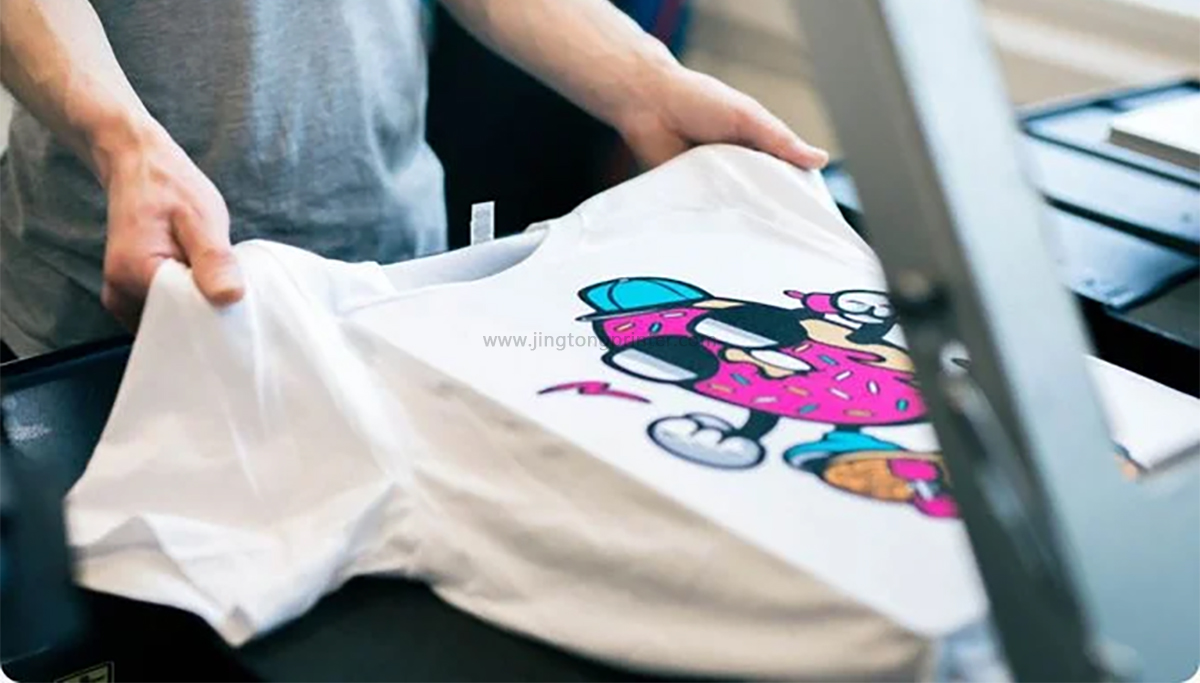
Garment positioning determines whether the fabric remains flat, stable, and correctly aligned during printing.
If a garment is placed unevenly on the platen, different areas may sit at different heights. This creates inconsistent printhead clearance and can affect ink placement across the design.
Common positioning problems include:
● Wrinkles and folds: Raised areas may cause printhead contact, while recessed areas can change the distance between the printhead and fabric.
● Uneven fabric tension: Loose or stretched sections may shift during printing, affecting image alignment and proportions.
● Incorrect platen alignment: The design may appear off-center or positioned incorrectly on the garment.
● Raised seams and collars: Thick areas can interfere with printhead clearance, particularly near the edges of the printing area.
Before printing, garments should be positioned according to the platen's alignment references. The fabric should be smooth without excessive stretching, and the printable area should remain stable throughout the printing process.
The Relationship Between Garment Thickness and Printhead Clearance
Different garment types have different thicknesses and surface characteristics. A lightweight T-shirt, a thick hoodie, and a textured sweatshirt may require different platen height adjustments.
If the platen height is set for a thin garment and a thicker item is loaded without adjustment, the printhead clearance may become too small. This increases the risk of head strikes.
Conversely, using excessive clearance for thinner garments may reduce printing precision and edge definition.
For garments with uneven surfaces, operators should also consider seams, pockets, zippers, and decorative elements. These areas may be higher than the main printing surface and should be kept outside the printhead's movement path whenever possible.
A consistent garment-loading procedure helps maintain the correct distance and reduces variations between printing jobs.
How Incorrect Settings Affect DTG Print Quality
Printhead height and garment positioning can produce several noticeable printing problems.
Blurred edges and reduced detail: Excessive printhead distance may affect droplet placement, making small text and fine graphic elements appear less sharp.
Ink misting and overspray: When droplets travel farther before reaching the fabric, some may deviate from their intended positions, creating unwanted ink around the design.
Uneven printing: Differences in fabric height can create variations in ink placement and appearance across the printed area.
Printhead strikes: Insufficient clearance may allow the printhead to touch raised fibers, wrinkles, or garment features, potentially causing serious equipment damage.
Misaligned designs: Incorrect garment positioning can cause the printed image to appear tilted, shifted, or incorrectly centered.
These symptoms may also be influenced by nozzle condition, ink delivery, fabric pretreatment, and printing settings. Printhead height and positioning should therefore be checked as part of a broader troubleshooting process.
Practical Tips for Consistent DTG Printing
A repeatable garment-loading and height-adjustment process is essential for stable production.
Before each job, check the garment thickness and select an appropriate platen height. Remove wrinkles and ensure the fabric is positioned flat within the printable area. Check that seams, collars, and other raised features do not interfere with the printhead's movement.
For different garment styles, establish separate loading and height references rather than relying on a single setting. Operators should also inspect the first printed sample to confirm image alignment, edge sharpness, and overall consistency.
Regularly checking the platen surface, printhead clearance, and garment positioning can help reduce printing defects and prevent unnecessary contact between the printhead and textile.
Conclusion
Printhead height and garment positioning are closely connected to DTG printing quality. The correct printhead clearance helps maintain accurate ink placement, while stable garment positioning ensures consistent printing distance and image alignment.
By adjusting platen height according to garment thickness, keeping the fabric flat, and following a consistent loading procedure, operators can improve image definition, reduce printing defects, and protect the printhead during production.
get latest company news
Scan To Wechat